

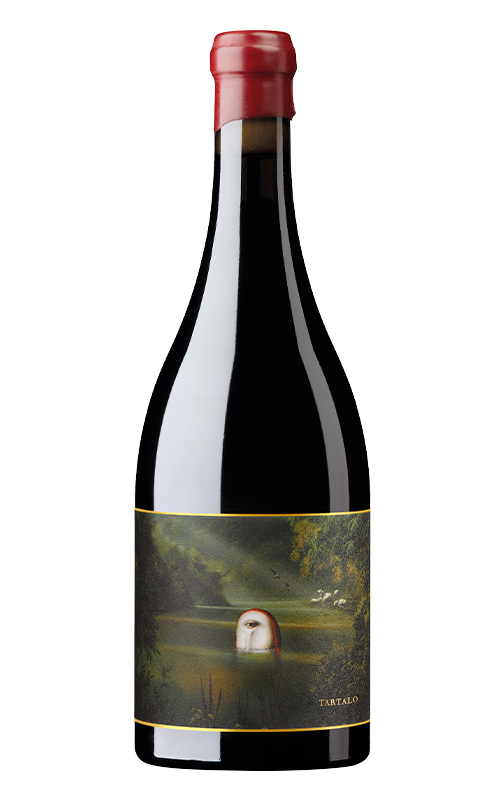
Tartalo 2024
Descrizione
Il nome viene da un ciclope della mitologia basca che viveva nel "vecchio mondo", un mondo spirituale e onirico, con cui Oxer Bastegieta, il suo creatore, vuole evocare quel piccolo universo spirituale ormai perso. Sull'etichetta si vede Tartalo che emerge dal lago come Excalibur, guardando di sottecchi il gregge di pecore che sarà il suo pasto.
Tartalo è, prima di tutto, un vino unico che mostra tutto il paesaggio che circonda il vigneto, conferendogli quella longevità e fluidità tannica uniche.
Dettagli del prodotto
Degustazione
Vigna e preparazione
Recensioni degli esperti
The 2024 Tartalo comes from a plot planted with a field blend, 0.7 hectares planted in 1920 in the village of Elvillar (Rioja Alavesa) at 600 meters above sea level in the zone known as Barranco de San Julián on limestone soils that deliver no more than 3,000 kilos per hectare. This is the most calcareous vineyard he works. It's mostly Tempranillo with a little Viura and some scattered plants of Graciano. The grapes were picked early to avoid too high alcohol and fermented partly destemmed and partly whole clusters that were foot trodden with indigenous yeasts in stainless steel, then the wine matured in 600-liter barrels for 10 months and periodically racked. This is very stony, earthy wine from very shallow soils, only 30 centimeters deep. The vines struggled and, despite their age, they are not very big, but that gives the wine incredible texture, and it's super dry and chalky, with fine granularity. The wine has the aromas of the place, full of aromatic herbs, rosemary and thyme. In 2024, this wine has lower alcohol than ever at 13%, with contained ripeness and a pH of 3.5. I've never seen it as chalky as this. He makes three barrels of this; two of them contribute to the blend of Kalamity, and the other one is bottled separately into this wine. There are some 900 bottles. It was bottled in September 2025.

Oxer Bastegieta è un giovane viticoltore ed enologo basco che ha deciso di puntare su Laguardia come centro di un nuovo approccio ai vini della Rioja, senza però dimenticare le sue radici nel mondo del txakoli.






Annate: 2024 2022
Questa annata non è ancora stata recensita. Utilizza la navigazione qui sotto per vedere le recensioni delle annate precedenti.
Questa annata non è ancora stata recensita. Utilizza la navigazione qui sotto per vedere le recensioni delle annate precedenti.