

 Ecologico
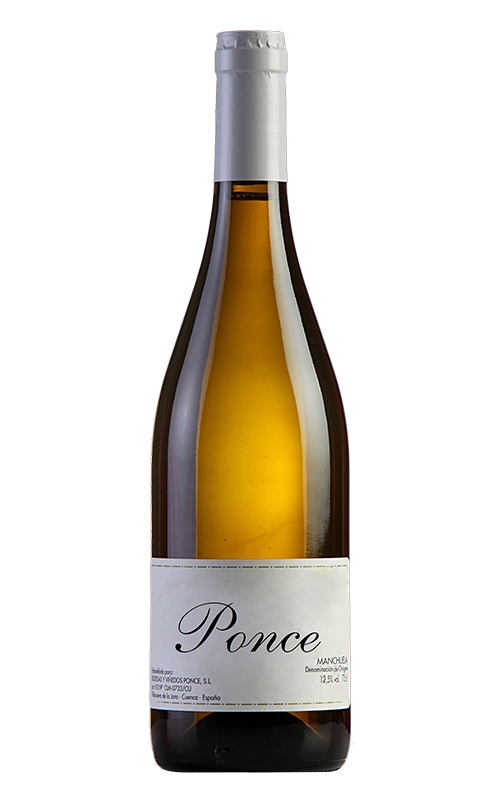
Ponce Blanco 2024
Descrizione
Reto, uno dei vini più famosi di Juan Antonio Ponce, è diventato Ponce Blanco a partire dall'annata 2022. È fatto al 100% con l'autoctona Albilla, la varietà più antica registrata nella denominazione di origine Manchuela. Ha un profilo austero, minerale e con la vivacità dei terreni granitici.
Dettagli del prodotto

Degustazione
Vigna e preparazione
Recensioni degli esperti
The entry-level white is the 2024 Ponce Blanco, which is a little confusing, because Ponce is used for the top-of-the-range red. This is the old Reto, a champion in drinkability, minerality and affordability, produced with grapes picked early because of the warm and dry conditions of the summer, keeping the alcohol level at 12.3% (12.5% on the label), with a pH of 3.1 and 6.4 grams of acidity. The picking date is the most important decision here, early this time. It comes from different vineyards, ages, soils and, for the third time, includes the plot by the winery at over 800 meters above sea level on rich limestone and gravel soils. It fermented in small 1,000-liter vats inside the cold chamber and matured in 600-liter barrels and 1,000-liter foudres for seven months, mostly without malolactic to keep the vibrant and saline part, even though some barrels might go through partial malolactic. The palate has more volume, the effect of the lees, but with a very good texture; it's sapid and saline with very well-integrated oak (they are slowly renewing the barrels so as not to mark the wine). It's incredible for the price, and it has a very good track record for aging potential. This year, 18,000 bottles were produced and volumes should grow in coming years as the new plantings in the higher part come into production. It was bottled in late March 2025.

L'Albilla di Ponce è un dono del cielo. Tensione, purezza e una finezza che non lascia indifferenti. Unitevi alla rivoluzione della Manchuela.

Il progetto a conduzione familiare di Juan Antonio Ponce, che punta a recuperare le varietà autoctone della zona e i vecchi vigneti, è la prova vivente che una Manchuela diversa è possibile.






Annate: 2025 2024 2023 2022
2023 me gusto mucho.
Gran blanco, fresco y mineral, excelente!!!
Vibrante y fresco. En nariz, aromas cítricos, frutas blancas. Boca equilibrada y con buena acidez.
Viva el vino.Salud
La Puntuación de RO algo inflada
Tremendo blanco a un precio increíble. Vino de clase mundial.